
Reviewed · PHOENIX MUSEUMS, ZOO & FAMILY ATTRACTIONS
Phoenix: World’s Only Global Musical Instrument Museum
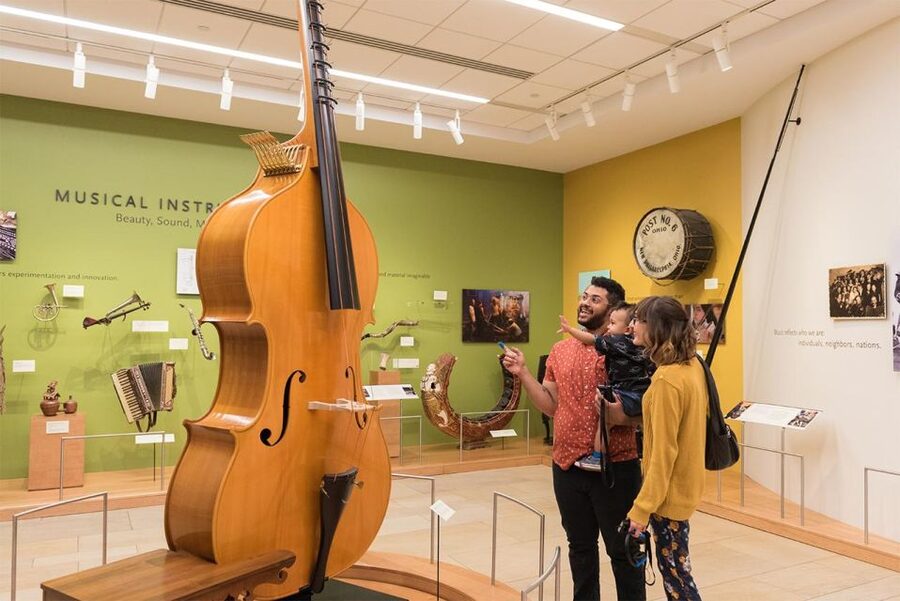
Music and culture in one smart museum loop. In Phoenix, the Musical Instrument Museum (MIM) turns listening into a guided world tour with 4,300 instruments spanning 6,000 years. I especially like the way it groups music by region, so you can follow how traditions connect across Africa, the Middle East, Asia and Oceania, Latin America, Europe, plus the United States and Canada.
Another reason I like MIM is the practical “do something with it” approach: you watch videos and hear performances tied to each display using the GuidePORT audio system, and you can even touch and play some instruments in the Experience Gallery. One consideration: MIM is strict about what you bring in, and outside food and drinks (including water) are not allowed except at Café Allegro.
In This Review
- Key points you’ll care about before you go
- Phoenix’s MIM: what you’re really paying for
- Entering on Mayo Blvd: parking and the item rules that affect comfort
- The global instrument galleries: how 6,000 years fits into one visit
- GuidePORT in the real world: videos, audio, and context you can actually use
- The Experience Gallery: when you get to touch and play
- Café Allegro and the no-outside-food rule
- How to pace a one-day visit so you don’t feel rushed
- Price, value, and what isn’t included
- Who MIM suits best (and who may want a different plan)
- Should you book MIM in Phoenix?
- FAQ
- How much does admission cost for the Musical Instrument Museum in Phoenix?
- How long is the visit?
- What’s included with the ticket?
- Can I play instruments at MIM?
- What language is the audio guide?
- Are food and drinks allowed inside the museum?
- Is the museum wheelchair accessible?
- Where is the meeting point for parking?
- Is cancellation free?
Key points you’ll care about before you go
- Over 200 countries and regions represented in one museum visit
- GuidePORT audio system helps you hear and watch instruments in their original cultural context
- Experience Gallery lets you touch and play select instruments
- Six thousand years of musical history laid out by world regions
- Café Allegro is your only place for food and drinks inside the museum
Phoenix’s MIM: what you’re really paying for

At $20 per person for a one-day visit, MIM is a rare deal that’s not just about looking. You’re paying to experience music history across the globe in a way that’s easy to navigate without being a music expert. The museum’s core promise is simple: 4,300 instruments and all genres, brought together from major world regions, with many pieces rare, historically significant, or tied to distinctive musical cultures.
What makes that value work is the museum’s structure. Instead of forcing you to pick one narrow track, MIM invites you to move room to room and keep discovering. One minute you’re listening to something tied to a ceremony or tradition; the next you’re learning how a specific instrument family developed and traveled.
There’s also an interactive layer. The GuidePORT system doesn’t just label things. It’s built to get you listening and watching in context. That matters because instruments aren’t only objects. They’re tools with sound, technique, and meaning, and MIM tries to show you the whole picture rather than treating everything like a static display behind glass.
And yes, it’s still a museum with rules and limits. But for a day in Phoenix, it’s one of the better ways to spend time indoors while still feeling like you went far.
Entering on Mayo Blvd: parking and the item rules that affect comfort
Start with the easiest part: parking. The parking lot entrance is on Mayo Blvd., just south of Loop 101, and it’s complimentary. That’s a big deal when you’re visiting a museum with lots to see, because getting stuck circling a lot kills momentum fast.
Admission includes your general entry plus the GuidePORT audio system and a brochure with a map. Language support is English, and the host or greeter is English too. So you’re not signing up for a scavenger hunt. You can get oriented and start moving.
Now the restrictions that matter for comfort:
- No outside food or drinks (water included) except at Café Allegro
- No weapons or sharp objects
- Bags over 18 by 18 inches must be checked at Guest Service, along with items like umbrellas, tripods, selfie sticks, and other similar items
If you like traveling light, you’ll like MIM even more. If you’re bringing a larger day bag, plan to check it. It won’t stop your visit, but it can change how relaxed your first hour feels.
Also, if you carry a baby, baby wearing is permitted only via slings or carriers worn on the front of the body. If you use a stroller, wheelchair access is available, and the museum is wheelchair accessible overall.
More Phoenix museums, the zoo and family attractions




The global instrument galleries: how 6,000 years fits into one visit
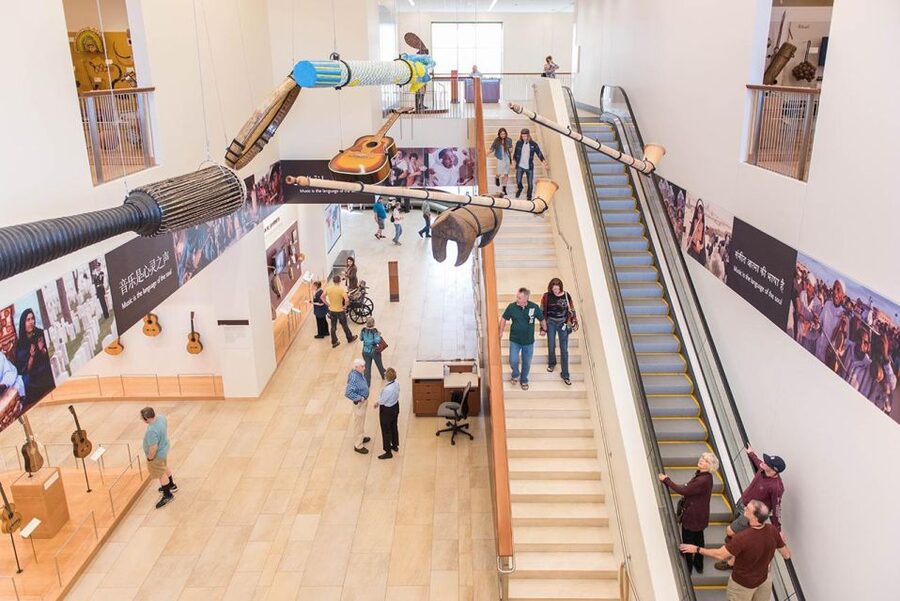
MIM is built around global musical heritage, ceremonies, and cultures from over 200 countries and regions. The scale is huge on paper, but the layout is designed to keep you oriented. The museum focuses on six major world regions: Africa, the Middle East, Asia and Oceania, Latin America, Europe, and the United States/Canada.
That region focus is what makes the visit feel like a real journey rather than a warehouse of instruments. You start to notice patterns: similar instrument families showing up in different forms; rhythms and roles changing with culture; instruments connected to ceremonies and social life, not just performance.
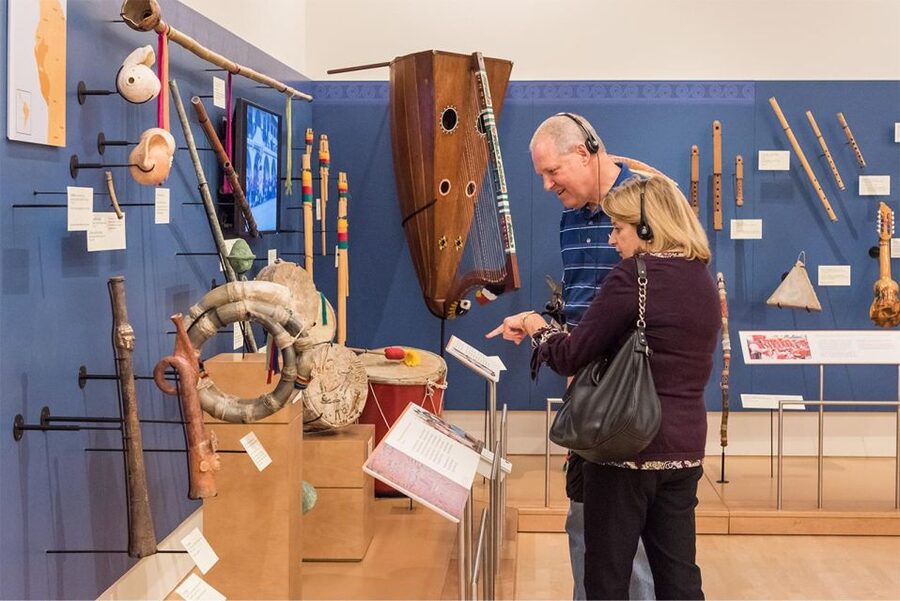
You’ll also see a wide range of instruments. Some are rare examples or the finest examples of their kind. Some are historically significant. Others are part of distinctive musical cultures where the instrument’s job is as important as its sound.
One smart detail: MIM doesn’t treat every exhibit as a label-only stop. Many displays support video and audio meant to place the instrument back in its setting. That means your brain can connect the object to a human moment—someone playing it, someone listening to it, and a reason it matters.
GuidePORT in the real world: videos, audio, and context you can actually use
The GuidePORT system is included with admission, and it’s one of the best parts of the value package. This is not just audio narration. The museum pairs audio with what’s on display, so you can watch and listen to performances tied to the instruments you’re seeing.
Here’s why that matters. Instruments aren’t intuitive just by looking. A drum can look simple, but the technique, pitch behavior, and role can be complex. A string instrument might share a shape across cultures, but tuning, playing position, and musical purpose can differ a lot. GuidePORT helps you bridge that gap without making you guess.
You’ll encounter displays where you can:
- Watch videos tied to the instrument’s original context
- Listen to performances connected to the exhibit
- Use the audio equipment to interact with what you’re seeing
So instead of walking through and hoping labels cover the details, you can spend your attention where it helps: on listening and comparing. It’s a great approach if you’re traveling with mixed music interest—someone who wants the story will get it, and someone who just wants to press play and learn will still feel pulled along.
If you want a smooth day, don’t try to use everything at once. Pick a few exhibits in each region and spend real time with them using GuidePORT. That’s how you get the connections the museum is aiming for: the idea that we share more than we think through music.
The Experience Gallery: when you get to touch and play
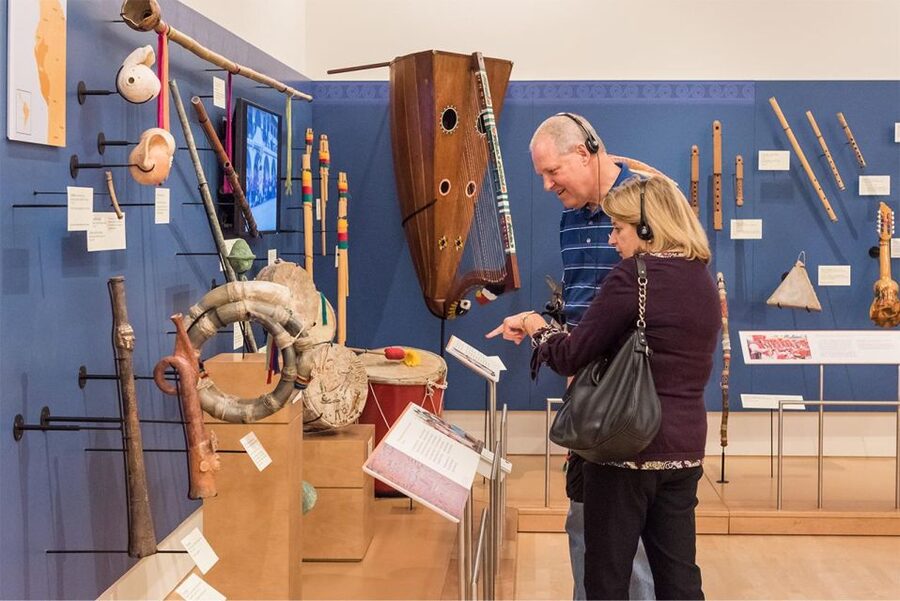
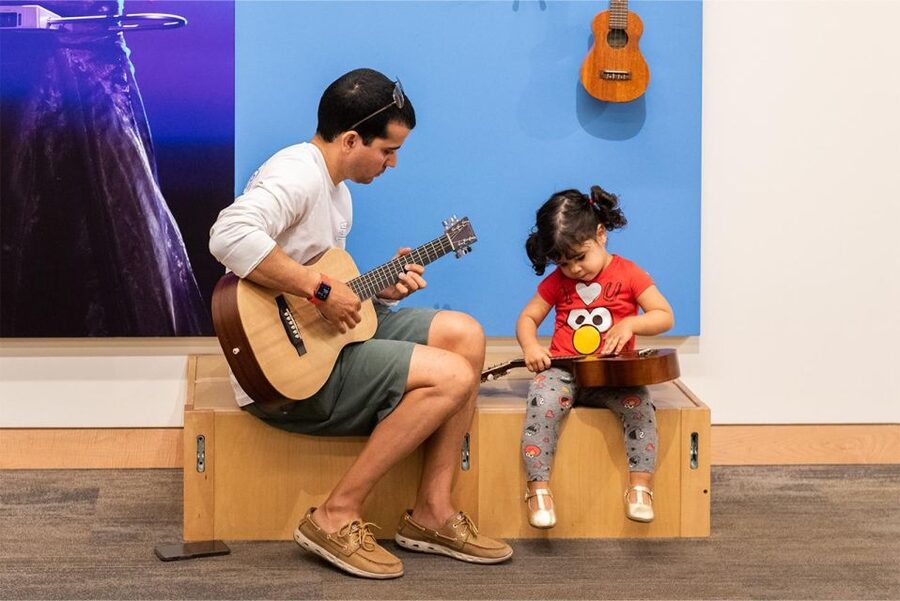
At some point, you’ll want a break from watching. That’s where the Experience Gallery earns its keep. It’s designed for interaction, including opportunities to touch and play some instruments.
This is the part I think most people will remember because it turns learning into muscle memory. Even if you don’t know the “right” way to play, you still learn something important: how sound responds to pressure, motion, angle, and timing.
It’s also the best antidote to museum fatigue. If you’ve been standing and reading for too long, touching an instrument resets your body and your focus. You go from passive viewing to active listening.
And since MIM includes audio equipment and hands-on sections, the Experience Gallery fits into the museum’s bigger theme: music as shared human expression. You aren’t only seeing history; you’re testing how instruments actually behave.
Tip for a better visit: pace yourself so you don’t save the hands-on part for the last minutes. If you leave it for late, you might rush and miss the simple joy of trying a few instruments at a comfortable speed.
- Small-Group or Private Grand Canyon with Sedona Tour from Phoenix
★ 5.0 · 2,405 reviews - Phoenix Morning Hot Air Balloon Ride with Bubbly + Breakfast
★ 5.0 · 2,049 reviews - 3 Hour Guided TomCar ATV Experience in Sonoran Desert
★ 5.0 · 1,947 reviews - Guided Arizona Desert Tour by ATV – Centipede Tour
★ 5.0 · 1,386 reviews
Café Allegro and the no-outside-food rule
Plan around this early: food and beverages, including water, aren’t permitted outside of Café Allegro. That means you can’t bring a picnic to extend your day. Once you’re inside, you’re working within the museum’s food rules.
So think of Café Allegro as part of your itinerary, not a last-minute stop. If you’re visiting with kids or anyone who gets hungry fast, build in time for a meal or snack so you don’t feel forced into eating quickly and then rushing back to galleries.
This also helps the museum keep a consistent experience inside the exhibits. Less clutter. Less mess. Easier cleaning. And yes, you’ll still get breaks, just in the right place.
If you’re the type who always keeps a bottle of water, note that you’ll need to buy or access drinks inside Café Allegro rather than bringing them in from your hotel.
How to pace a one-day visit so you don’t feel rushed
MIM is a one-day experience, but “one day” can mean anything from a quick walk-through to a slower, listening-heavy visit. The smart strategy is to treat it like a set of short loops: pick a region, spend time with a handful of instruments using GuidePORT, then move on.
If you try to see everything, you’ll end up skimming. That’s a waste at a museum like this, because the value is in hearing and comparing, not just collecting photos.
A good pacing rhythm looks like this:
- Start with general orientation using the brochure map
- Pick a few exhibits per region for deeper audio/video time
- Save the Experience Gallery for mid-to-late afternoon so you still have energy to play
- Take breaks, especially with Café Allegro since you can’t bring outside food
If you’re visiting as a music fan or with someone who’s a musician, plan extra time. You’ll likely want longer stops at the instruments that match their interests, and MIM’s range makes that easy.
And if you’re visiting with family, the hands-on moments and the GuidePORT audio make it easier to keep attention without constant reading.
Price, value, and what isn’t included
Let’s talk money honestly. Admission is $20 per person, and it includes:
- General admission entry to the Musical Instrument Museum
- GuidePORT system with an audio guide (English)
- Brochure with a map
Not included:
- Concert admission
- Special exhibition
That separation matters. If your goal is a concert or a specific special exhibition, you’ll need to add that separately. But for a standard day focused on the core instrument collections and the interactive parts, the included package is already doing a lot of work for you.
Value comes from the sheer density of what’s included. You’re paying once to access:
- A museum that covers major world regions
- Instruments spanning over 200 countries and regions
- A system that helps you hear and watch in context
- A hands-on Experience Gallery
In other words, your ticket isn’t just entry. It’s a structured way to learn and interact without extra add-on costs (besides any optional concerts or special shows).
Who MIM suits best (and who may want a different plan)
MIM works especially well for:
- People who love music but don’t want to be stuck in one genre or one country
- Families who need both education and hands-on fun
- Musicians or aspiring musicians who want to see how instrument roles vary by culture
- Travelers who prefer meaningful indoor activities during hot weather in Arizona
A musician in the group is often the happiest surprise. Seeing so many instrument types in one place can be both inspiring and practical. The museum’s focus on context—music tied to ceremonies and original settings—helps even experienced players think beyond their usual world.
It can also work for casual visitors because the GuidePORT system and video/audio pairings keep you engaged without requiring heavy prior knowledge.
If you’re only interested in one narrow thing—say, one instrument family or one music era—you might find yourself wanting a more specialized experience. But for a first visit, MIM is a strong all-around choice.
Should you book MIM in Phoenix?
If you want a one-day plan that feels bigger than it is, MIM is a solid yes. For about $20, you get global coverage, thousands of instruments, and an audio system that helps you actually understand what you’re hearing and seeing. The Experience Gallery adds a playful break from standing still, and Café Allegro gives you a clear place to regroup.
I’d book it if:
- You like learning through sound and hands-on interaction
- You’re traveling with someone who has varied interests
- You want a memorable indoor activity with a world-school feel, without needing tickets for extra events
I’d think twice if:
- You’re mainly interested in concerts or special exhibitions (those cost extra)
- You hate museum rules about bags and outside food, since you’ll need to work with the Café Allegro and checked-item limits
Overall, MIM is a strong pick for people who enjoy meaningful culture—and who like their travel days to include both listening and a chance to make noise yourself.
FAQ
How much does admission cost for the Musical Instrument Museum in Phoenix?
Admission is $20 per person.
How long is the visit?
You’re purchasing a 1-day entry.
What’s included with the ticket?
General admission entry, the GuidePORT audio guide system (English), and a brochure with a map are included.
Can I play instruments at MIM?
Yes. There’s an Experience Gallery where you can touch and play some instruments.
What language is the audio guide?
The GuidePORT system and host/greeter support are in English.
Are food and drinks allowed inside the museum?
No. Food and beverages, including water, aren’t permitted outside of Café Allegro. No outside food or drink is allowed inside the museum.
Is the museum wheelchair accessible?
Yes, the museum is wheelchair accessible.
Where is the meeting point for parking?
The parking lot entrance is on Mayo Blvd., just south of Loop 101, and it’s complimentary.
Is cancellation free?
Free cancellation is available up to 24 hours in advance for a full refund.
More Phoenix Museums & Family Attractions
- Phoenix: Hall of Flame Museum of Firefighting Entry Ticket★ 4.9 · 3 reviews
More Tour Reviews in Phoenix
- Small-Group or Private Grand Canyon with Sedona Tour from Phoenix★ 5.0 · 2,405 reviews
- Phoenix Morning Hot Air Balloon Ride with Bubbly + Breakfast★ 5.0 · 2,049 reviews
- 3 Hour Guided TomCar ATV Experience in Sonoran Desert★ 5.0 · 1,947 reviews
- Guided Arizona Desert Tour by ATV – Centipede Tour★ 5.0 · 1,386 reviews
More Phoenix Museums, Zoo & Family Attractions
- Phoenix Zoo One Day General Admission Ticket★ 4.5 · 465 reviews
- Phoenix Zoo Admission Ticket★ 4.0 · 146 reviews
- SEA LIFE Aquarium Arizona Admission Ticket★ 4.0 · 140 reviews
- LEGOLAND® Discovery Center Arizona Admission Ticket★ 4.0 · 54 reviews
Not sure yet? Here are more Phoenix tours and Arizona day trips in the guide





Phoenix Museums, Zoo & Family Attractions, compared.
 ★ 4.5Phoenix Zoo One Day General Admission TicketFrom $39465 reviews
 ★ 4.0Phoenix Zoo Admission TicketFrom $39146 reviews
 ★ 4.0SEA LIFE Aquarium Arizona Admission TicketFrom $19140 reviews
 ★ 4.0Scottsdale: Museum of Illusions Ticket at Arizona BoardwalkFrom $3161 reviews
 ★ 4.0LEGOLAND® Discovery Center Arizona Admission TicketFrom $2454 reviews
 ★ 4.9Hall of Flame Museum of Firefighting Entry TicketFrom $193 reviews
Browse the lists this tour appears in