
Reviewed · CAMELBACK & SONORAN DESERT HIKING
Phoenix: Amazing Two-Hour Guided Hike in the Sonoran Desert
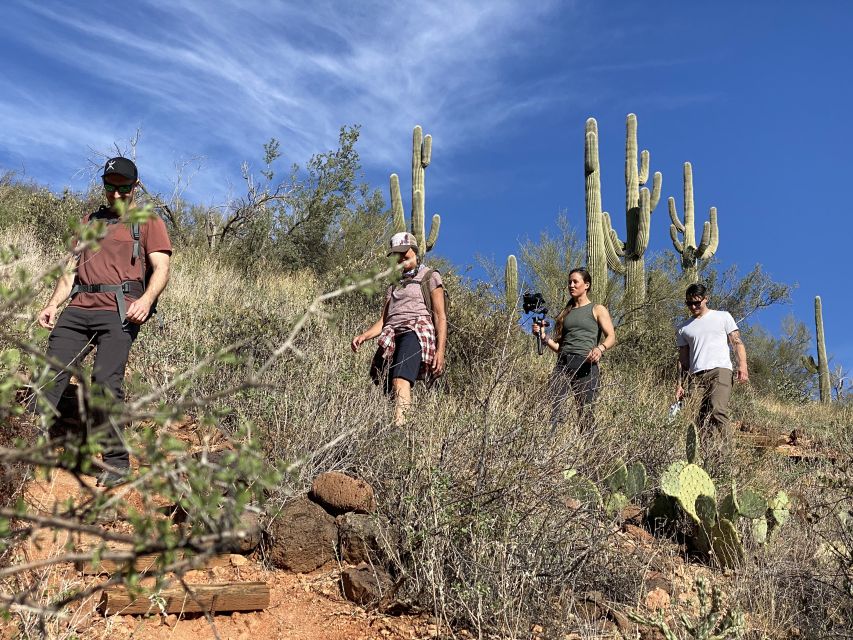
A Sonoran hike beats a city walk. You’ll step into the Phoenix Mountains Preserve for a two-hour guided desert hike with real explanations and real views. I like that you get up close to the desert’s plants and geology while the trail climbs the switchbacks toward lookout points above the Valley of the Sun.
I also like the people side: small groups (up to 10) led by a guide with Wilderness First Responder or EMT training, so safety and pacing feel taken care of. One thing to plan for: the meeting point can trip you up if you rely on directions alone, so drive into the park to the final parking lot called Ocotillo.
In This Review
- Key Points You’ll Care About
- A Two-Hour Sonoran Desert Hike That Actually Feels Worth It
- Getting to Piestewa Peak Park and the Ocotillo Lot
- The Phoenix Mountains Preserve Climb: Switchbacks, Peaks, and 40-Mile Views
- Desert Learning in Motion: Geology, Cacti, and Animal Clues
- What Two Hours Feels Like on the Trail (And How It’s Managed)
- Safety and Comfort: Wilderness-First Training and Real Desert Common Sense
- Price Check: Is $125 Worth It?
- What to Bring (So You Don’t Overheat)
- Who This Hike Is Best For
- Final Take: Should You Book This Phoenix Desert Hike?
- FAQ
- How long is the guided hike?
- Where does the tour meet?
- What’s included in the price?
- Do I need to bring water or snacks?
- What should I bring for the hike?
- What shoes are allowed?
- What group size is it?
Key Points You’ll Care About
- Small group size (10 max) means more back-and-forth and less waiting around on the trail
- Guides with Wilderness First Responder or EMT training keep the hike steady and safety-minded
- Big viewpoints in just two hours thanks to the climb toward a mountain saddle and overlooks
- Desert learning along the way: geology, native plants, and animals you can spot and track
- Everything practical included: water, trail snacks, backpacks, park access, and refreshments after
A Two-Hour Sonoran Desert Hike That Actually Feels Worth It
Phoenix has plenty of sunny-day options. This one is special because it’s not just a walk. It’s a guided hike through the high desert edge where you can see the city spread out below, then turn your head and notice what the desert is doing on its own terms.
You’ll be moving at a hiking pace, but the stops matter. The guide points out what to look for—forms of rock, patterns in the land, and desert life that doesn’t scream for attention like a roadside attraction. In other words: you don’t just hike through the desert. You start noticing it.
At $125 per person for a two-hour experience, it’s not a cheap impulse buy. Still, the value is pretty clear once you consider what you get: a medically trained guide, bottles of purified water, trail snacks, lightweight backpacks, any park/preserve admission fees, and refreshments at the end. You’re paying for guided time plus the support gear—less for a ticket that mostly sits in a drawer.
Getting to Piestewa Peak Park and the Ocotillo Lot
Your guide meets you at Piestewa Peak Park (2701 E. Piestewa Peak Drive, Phoenix). The key detail is where you park and meet: drive all the way east into the park and meet at the final parking lot called Ocotillo.
This matters more than you might expect. One traveler’s experience captured a common problem in Phoenix preserves: if the meeting point description isn’t crystal-clear in your navigation app, you can waste time hunting. So do this the simple way—go early enough to park calmly, then confirm you’re in the Ocotillo lot before you start texting or calling.
Also, the hike starts at the trailhead, not from a hotel pickup. If you’re renting a car or using a rideshare, plan for the few minutes of buffer so you aren’t stressed right at the start. Desert hikes reward calm.
More Camelback and Sonoran Desert hikes worth an early Phoenix start



The Phoenix Mountains Preserve Climb: Switchbacks, Peaks, and 40-Mile Views
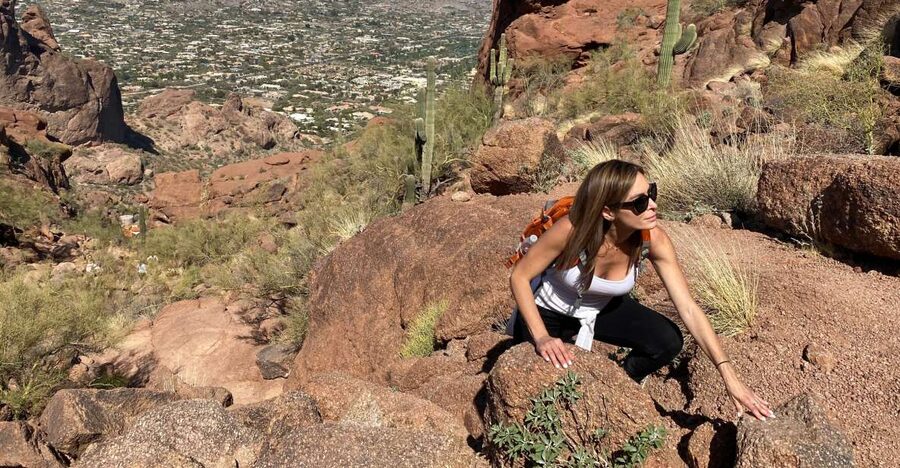
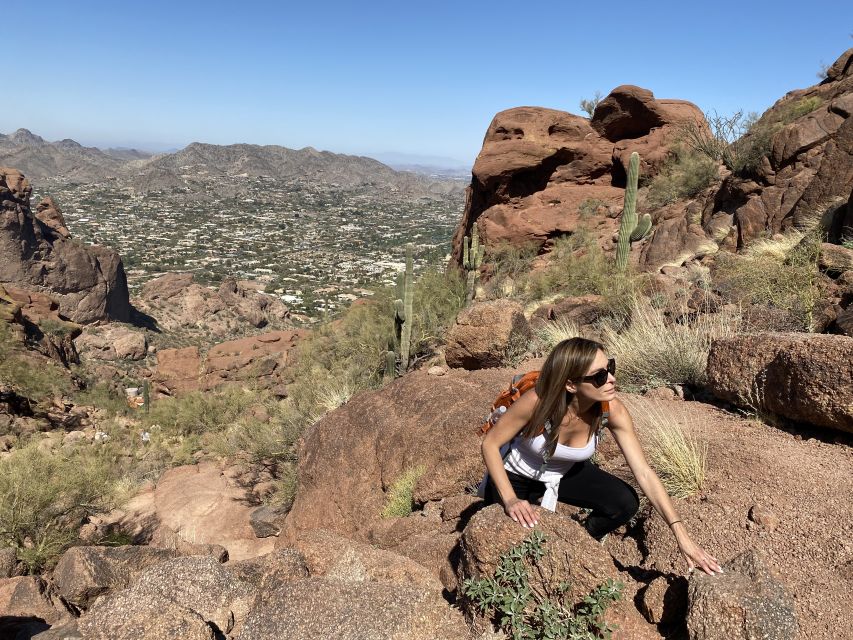
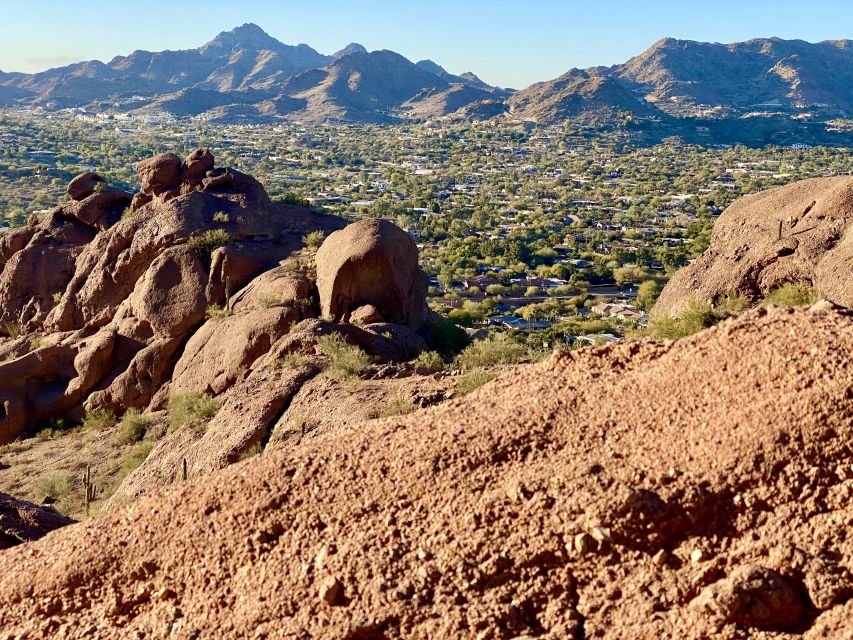
The route is designed for maximum scenery in a short window. You’ll hike through a protected area of the Sonoran Desert and steadily ascend the switchbacks for big panoramic moments over Phoenix and Scottsdale, with landmarks like Camelback Mountain in your line of sight.
As you gain elevation, the desert changes. From lower trail sections it can look like a flat expanse of tan and thorny silhouettes. Up higher, you start seeing depth—layered ridges, different shades of rock, and distant mountain lines that help you understand how this landscape was shaped.
One of the main payoffs comes when you reach a mountain saddle. That’s where the view opens for Piestewa Peak and the surrounding desert mountain range, and you can see the Sonoran Desert stretching west for more than 40 miles. It’s the kind of view that makes you pause for photos even if you’re not a photographer.
The itinerary is built around this “climb, pause, look, learn” rhythm. You spend enough time moving to feel like you got your hike in, then enough time at viewpoints that you leave with more than just footsteps.
Desert Learning in Motion: Geology, Cacti, and Animal Clues
The best part of a good desert guide is that they show you what you’d otherwise walk past. During this hike, you’ll learn about the area’s geology and the native flora and fauna that make the Sonoran Desert what it is.
Expect the guide to connect features you see right in front of you to the bigger story: why rocks and ridges look the way they do, how plants survive extreme sun and dry air, and what to look for when it comes to desert animals. Sometimes that means spotting a plant right away. Other times it means noticing evidence—tracks, where an animal might hide, or how the terrain funnels life.
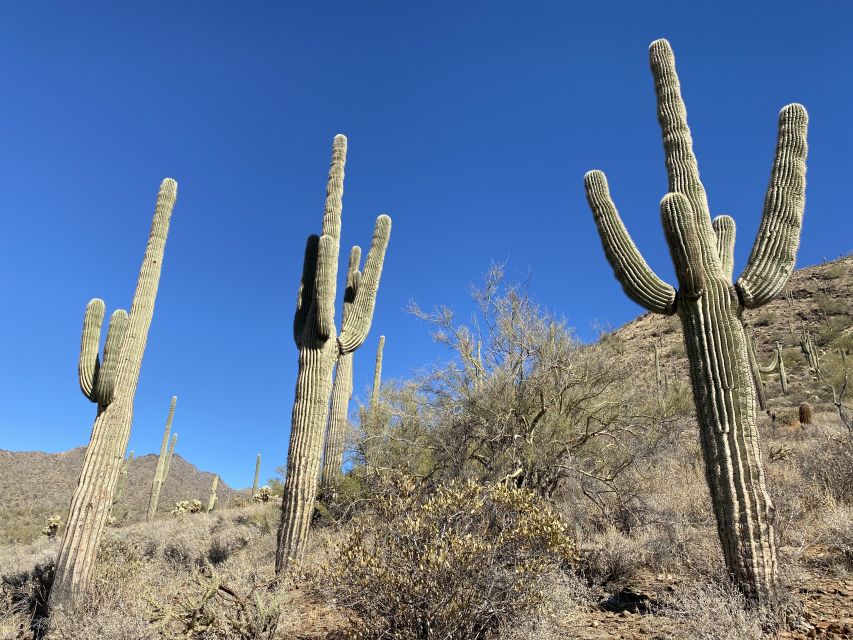
You’ll also likely see a variety of cacti. It’s not just a cactus walk, though. The guide helps you understand the “why” behind what you’re noticing, so the hike becomes a mini field lesson with a view at the end.
On past outings, guides have taken different styles of routes while keeping the same theme: nature talk plus safe, steady hiking. For example, Michael has led groups on nature walks around the Piestewa Mountain Reserve and kept the vibe both fun and safety conscious. Jay has been praised for good communication and for calling out geology and fauna. Doug has guided hikes at a pace that works for real humans, not just training plans.
What Two Hours Feels Like on the Trail (And How It’s Managed)
Two hours sounds short until you’re climbing in the desert heat. The good news is that this hike is set up for momentum. You’ll be hiking, not waiting around for long explanations. Stops happen, but they’re built into the experience so you keep moving.
The guide also matters here. You’re not just getting “directions.” You’re getting pacing and safety judgment, plus the ability to adapt if conditions are hotter, windier, or just more intense than expected.
A big plus is the small-group format: up to 10 people. That tends to make the whole hike calmer. You can ask questions without the guide repeating themselves for 25 people, and the group can stay together without turning the trail into a traffic jam.
And yes, the guides sometimes bring extra little helpful items. One person mentioned that a guide had a hiking pole to share when it was needed. That doesn’t mean you should skip bringing your own support gear, but it’s a reminder that guides are thinking about comfort, not just checklists.
More guided Sonoran Desert tours we rate
- 3 Hour Guided TomCar ATV Experience in Sonoran Desert
★ 5.0 · 1,947 reviews - Guided Arizona Desert Tour by ATV – Centipede Tour
★ 5.0 · 1,386 reviews - Guided Arizona Desert Tour by UTV – Centipede Tour
★ 5.0 · 1,216 reviews - Ancient Ruins Tour – Guided Arizona Desert Tour by UTV
★ 5.0 · 684 reviews
Safety and Comfort: Wilderness-First Training and Real Desert Common Sense
This experience includes a guide with Wilderness First Responder or EMT certification. That doesn’t guarantee nothing will ever happen on a hike. But it does mean you’re in hands trained to manage the reality of outdoor conditions—heat, dehydration risk, and the classic “I’m fine” attitude that sometimes needs a gentle reality check.
Because the desert is not forgiving, the hike also leans on practical preparations you don’t have to organize yourself:
- bottles of purified water
- trail snacks
- lightweight backpacks
- refreshments after the hike
One more comfort factor: weather and clothing. The tour asks you to bring weather-appropriate clothing and even thermal clothing (which is a sign you may hike in conditions where temperature changes matter—early, late, or windy). It’s smart.
Price Check: Is $125 Worth It?
Let’s be honest. $125 per person is a decision price, not a “sure, why not” price.
Here’s why it can feel fair:
- You get a professionally trained guide (Wilderness First Responder or EMT) instead of a casual “local who knows the trail”
- Water, snacks, and refreshments are included
- You don’t have to worry about park/preserve admission fees
- The group is limited to 10, which usually means better attention and fewer distractions
- You get hiking support gear via lightweight backpacks
If you’ve ever tried to do a desert trail alone and ended up overthinking safety, underpacking water, or missing the plants and rock features that actually make the place interesting, this kind of structured hike tends to pay for itself in stress saved.
If you’re a hardcore hiker who just wants miles, this might feel short. But if your goal is to learn and see real viewpoints without spending a whole day planning, two hours with the right guide is good value.
What to Bring (So You Don’t Overheat)
The tour spells out what works best. Here’s your checklist in plain language:
You should bring:
- sunglasses
- a sun hat
- hiking shoes (closed-toe is required)
- weather-appropriate clothing
- thermal clothing
- clothing suited to the conditions you expect
Not allowed:
- sandals or flip flops
That’s not picky. It’s about feet and stability. Desert trails can be rocky and uneven, and closed-toe shoes protect you from blisters and sharp surprises.
If you’re coming from a typical vacation day—shorts, sandals, and whatever shirt you packed—take five minutes to swap into real hiking shoes and a hat. You’ll enjoy the climb more, and you’ll feel less irritated when the sun hits.
Who This Hike Is Best For
This is a great fit if you want a desert experience with structure. You’ll enjoy it whether you’re visiting for the first time or you’ve been in Phoenix before and want something more meaningful than a viewpoint drive.
It also works for mixed comfort levels because the guide can set a pace that keeps people moving without turning it into a race. People have specifically mentioned enjoying the hike even when they were cautious about heat, and others have loved the fact that it wasn’t overly challenging while still delivering strong views.
If you’re traveling with older relatives, it’s worth considering. One person said they had no difficulty with the climb even at age 61, which suggests the route is manageable for many visitors—assuming you can handle uphill walking.
If you need a long endurance trek or you want technical scrambling, you’ll probably want a longer or harder option elsewhere. This is about two hours of desert scenery plus learning, not a multi-hour suffer-fest.
Final Take: Should You Book This Phoenix Desert Hike?
I’d book it if you want three things: views that feel worth the effort, guided desert learning, and a smooth experience where the practical stuff is handled for you.
Skip it if you hate uphill walking, don’t want to follow a gear list (hat, closed-toe shoes), or you’re expecting a “wildly rugged adventure for hours.” This is a well-paced hike designed for visitors who want the best payoff without turning it into a full-day project.
If you do book, arrive with time to park at Piestewa Peak Park and meet at the final Ocotillo lot. Then bring the right shoes, wear a hat, and let the guide do the talking—because the desert is much more interesting once someone points out what you’re actually looking at.
FAQ
How long is the guided hike?
The experience lasts about 2 hours.
Where does the tour meet?
You meet at Piestewa Peak Park, 2701 E. Piestewa Peak Drive, Phoenix, AZ, and you should drive all the way east into the park to the final parking lot called Ocotillo.
What’s included in the price?
Included are an expert professional guide with Wilderness First Responder or EMT certification, use of lightweight backpacks, bottles of purified water, healthy trail snacks, any admission fees to parks or preserves, and refreshments after the hike.
Do I need to bring water or snacks?
No. Water (purified bottled water) and trail snacks are included.
What should I bring for the hike?
Bring sunglasses, a sun hat, hiking shoes, weather-appropriate clothing, and thermal clothing.
What shoes are allowed?
Sandals and flip flops are not allowed. You should wear closed-toe hiking shoes.
What group size is it?
It’s a small group limited to 10 participants, and the live guide is in English.
More Guided Sonoran Desert Tours
- 3 Hour Guided TomCar ATV Experience in Sonoran Desert★ 5.0 · 1,947 reviews
- Guided Arizona Desert Tour by ATV – Centipede Tour★ 5.0 · 1,386 reviews
- Guided Arizona Desert Tour by UTV – Centipede Tour★ 5.0 · 1,216 reviews
- Ancient Ruins Tour – Guided Arizona Desert Tour by UTV★ 5.0 · 684 reviews
More Tour Reviews in Phoenix
- Small-Group or Private Grand Canyon with Sedona Tour from Phoenix★ 5.0 · 2,405 reviews
- Phoenix Morning Hot Air Balloon Ride with Bubbly + Breakfast★ 5.0 · 2,049 reviews
- 3 Hour Guided TomCar ATV Experience in Sonoran Desert★ 5.0 · 1,947 reviews
- Guided Arizona Desert Tour by ATV – Centipede Tour★ 5.0 · 1,386 reviews
More Camelback & Sonoran Desert Hikes
- Epic Camelback Mountain Guided Hiking Adventure in Phoenix, Arizona★ 5.0 · 250 reviews
- Phoenix Mountains Preserve Night Glow Hike★ 5.0 · 25 reviews
- Guided Desert Sunrise or Evening/Sunset 2-Hour Hike at South Mtn★ 5.0 · 22 reviews
- Camelback’s Hidden Gems – Hike & Yoga with a View★ 5.0 · 18 reviews
Not sure yet? Here are more Phoenix tours and Arizona day trips in the guide


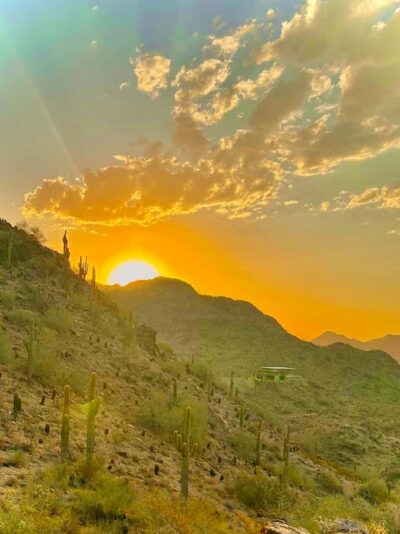


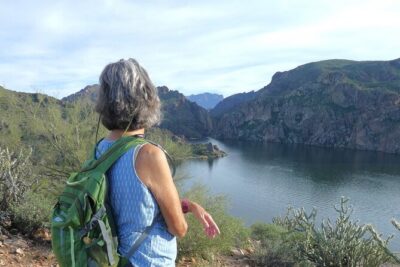
Camelback & Sonoran Desert Hiking, compared.
 ★ 5.0Epic Camelback Mountain Guided Hiking Adventure in Phoenix, ArizonaFrom $145250 reviews
 ★ 5.0Camelback E-Bike & Hike Tour – 2.5 HoursFrom $135132 reviews
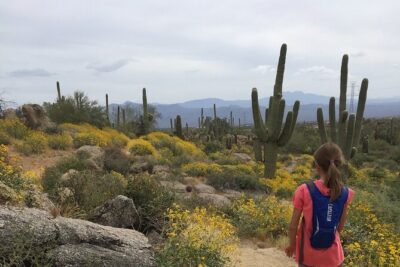 ★ 5.01-2 Hour Sonoran Desert Private Guided Hiking TourFrom $7076 reviews
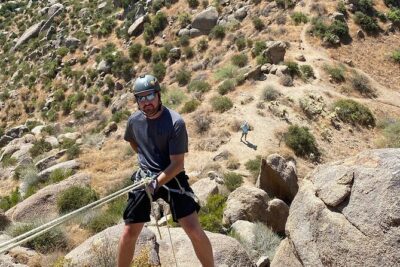 ★ 5.0Rappelling Adventure in ScottsdaleFrom $19257 reviews
 ★ 5.0Scottsdale Desert Classic Guided Hiking AdventureFrom $14545 reviews
 ★ 5.03-Day Grand Canyon Classic Hike to the Colorado River42 reviews
 ★ 5.0Phoenix Mountains Preserve Night Glow HikeFrom $7525 reviews
 ★ 5.0Water Canyon AdventureFrom $28024 reviews
Browse the lists this tour appears in